
January 13 2026 at 10:00AM
Projects, People, and Possibility: A Journey Forged Through Decades of Learning and Transformation
-(1).png)
Meet Suvojit De
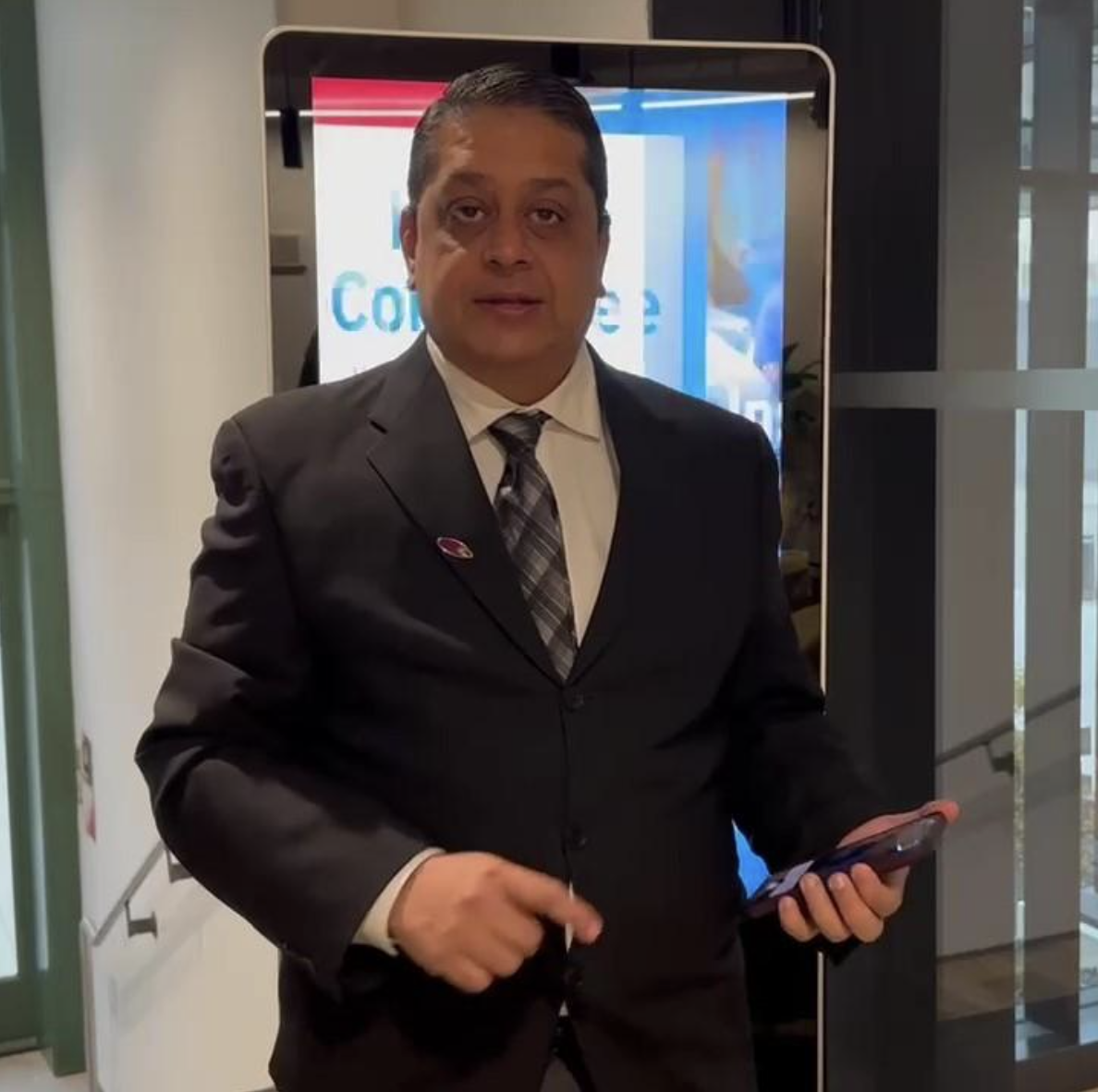 It is truly an honor to be invited to share my journey as part of PMI Manitoba’s PM Spotlight Series. I’m deeply grateful for this opportunity and genuinely humbled to reflect on experiences that span more than three decades. My hope is not just to recount milestones, but to share lessons—especially the imperfect, hard-earned ones—that might resonate with fellow project professionals navigating their own paths.
"If there is one overarching truth I have come to accept, it is this: professional careers are rarely linear."
A Career Rarely Follows A Straight Line
When I look back on my career, I don’t see a carefully choreographed plan unfolding exactly as intended. What I see instead is curiosity—sometimes intentional, sometimes accidental—paired with continuous learning, a fair number of missteps, and an extraordinary number of people who took the time to guide, challenge, and support me along the way.
My professional journey began more than three decades ago in India, where my first job was as a teacher of Computer Science, at the Institution where I had just completed by Post Graduation Masters on Computer Science. I taught diverse groups of students—from young, eager learners just beginning their careers, to seasoned professionals seeking to enhance their skills in an intensely competitive environment. Teaching across this spectrum was formative. It forced me to think deeply about how people learn, why they might struggle, and what truly helps knowledge take root.
Two lessons from that period have stayed with me ever since.
The first is the importance of strong theoretical foundations. Understanding how something works—not just how to use it—is critical. Whether it’s software, systems, or organizations, surface-level knowledge only takes you so far. And, when I say foundations, it is important to understand that the they go a lot deeper than just the academic foundations—it includes, the experiences that one goes through when one is learning—the interactions with people during the process, the environment within which the learning took place, the understanding of the concepts, they all count. The best way to explain it is to think about a house or a building analogy—the stronger the foundation, the stronger, more stable the finished property.
The second lesson was even more impactful: true understanding emerges when theory is applied to solving real & practical problems. Watching students approach the same problem in thirty different ways (each batch had 30 students, and I was teaching 5 batches) taught me patience, adaptability, and humility. It also taught me that there is rarely one “perfect” solution—only solutions that are appropriate for a given context.
At the time, I didn’t realize it, but I was already developing the mindset that would later serve me well in project management.
From Teaching to Building
Eventually, my desire to create and build led me into the world of software development. I worked with technologies that now feel nostalgic—COBOL, dBase, Visual Basic, C, PowerBuilder—developing production systems for multinational clients. Writing code, testing solutions, and seeing systems go live was immensely satisfying.
But the most powerful lesson from that phase of my career wasn’t technical. It was about teamwork.
Developers, testers, architects, and project managers all played essential roles. No single individual could succeed in isolation. One missed dependency, one miscommunication, or one overlooked risk could have consequences ranging from inconvenient to catastrophic.
Then came a moment that quietly altered the trajectory of my career.
Our project manager left unexpectedly. Leadership turned to the team, and as often happens, the person with the most experience was “identified” or “tagged”, as they say. In this case, that person happened to be me.
I vividly remember the feeling—what I now describe as a “deer caught in the headlights” moment. I had no formal training, no certification, and no real understanding of what project management entailed beyond the literal meaning of words like schedule, budget, and scope.
But the work had to continue.
So, I learned—quickly and imperfectly.
Now, people who know me, know that I like to meet challenges head on. Whether it is life, sport, profession OR personal, thanks to strong family (and surroundings) support and upbringing, I was taught (and then practiced through the years to inculcate) the ability to think through challenges - understand what is needed and why, break them down into smaller, manageable chunks and think logically to solve each part of the problem presenting itself.
Project Management, as I found out, is no different!
Learning Project Management, the Hard Way
My first project plan was created on paper. It was crude but honest. Tasks were listed, owners assigned, timelines sketched, and dependencies guessed. Soon after, I transferred it into Microsoft Excel — a tool I still hold a soft spot for — because it could organize a list. Unbeknownst to me at the time, I had created my first work breakdown structure!
Weekly updates to leadership became my first project status reports. As more challenges emerged and we gathered more details, we began identifying risks, dependencies, and mitigation strategies. With each iteration, the process improved. But one thing remained constant: I could not do this alone.
The success of that project—and many that followed—hinged entirely on the willingness of the team to collaborate, adapt, and trust one another. That experience taught me one of the most enduring lessons of my career: project management is fundamentally about people and the trust and relationships we develop with them.
Project Management Is a People Discipline
Over the years, I have worked across industries including financial services, telecommunications, insurance, education, public sector, retail, and even spent time in product marketing for Apple technology. My roles evolved from technical contributor to program leader, organizational change agent, and executive leadership.
Yet the nature of the work remained remarkably consistent. Projects always involved complexity, competing priorities, diverse stakeholders, and uncertainty. 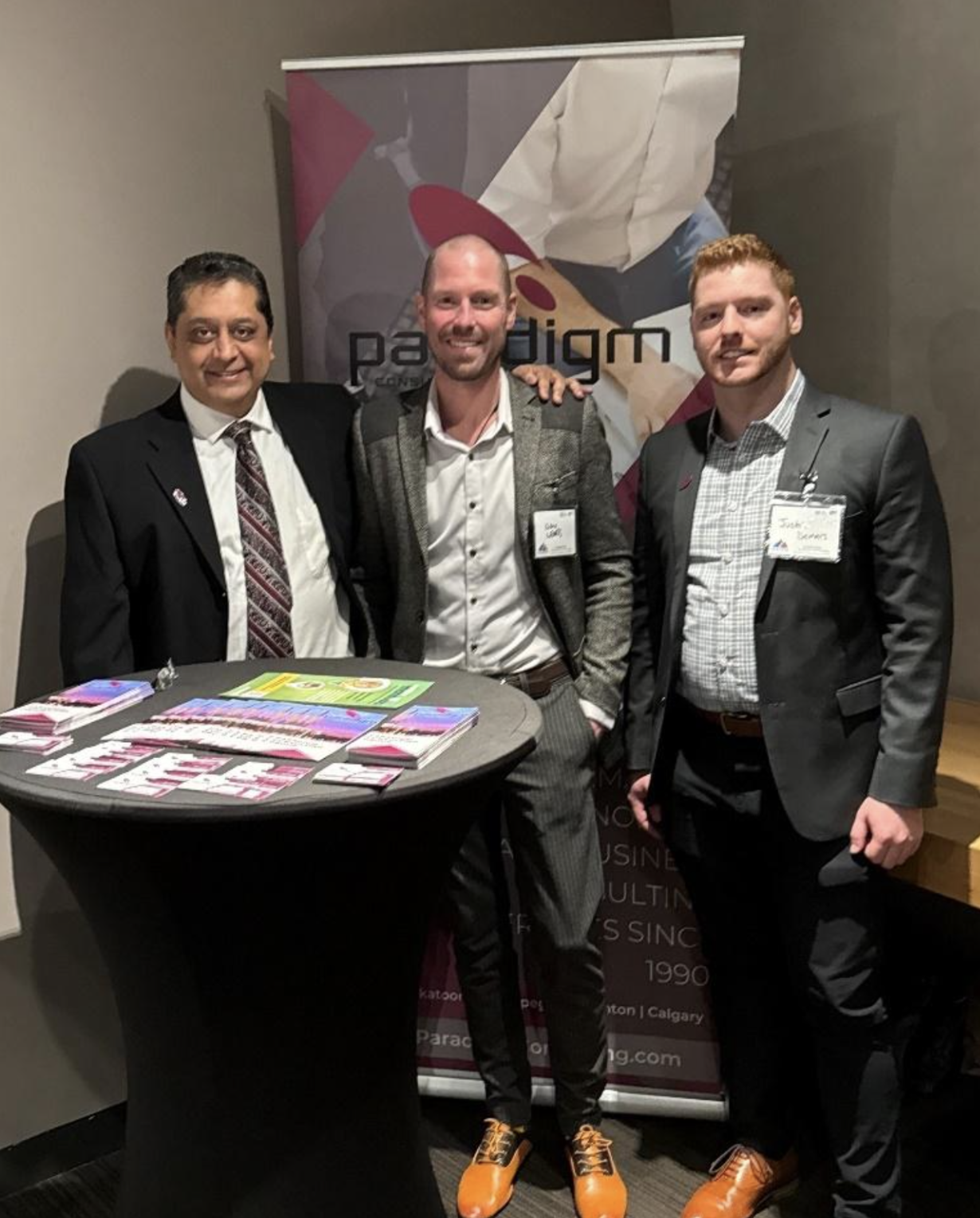
While it is an established fact that projects have defined start and end points, the real challenge lies in everything that happens in between—navigating ambiguity, managing expectations, and sustaining momentum.
Early in my project management journey, I believed that success depended primarily on strong planning, detailed schedules, and robust governance. No question that those elements are important—but they are rarely decisive. Experience taught me that how we treat people—how we listen, communicate, and respond under pressure — ultimately determines outcomes.
Projects succeed when teams feel psychologically safe, when leaders listen more than they speak, and when everyone understands not just what they are doing, but why it matters.
Some of my most valuable lessons came from projects that struggled. Missed milestones, cost overruns, scope creep were rarely caused by technology alone. More often, the root causes were misaligned expectations, unclear accountability, change fatigue.
These moments reshaped how I lead today—with empathy, transparency, and an unwavering focus on collaboration.
One piece of advice shared with me early in my career by a CEO I deeply respect has stayed with me ever since:
“Treat people with respect, and never let go of common sense. It will guide you in whatever you do.”
Leadership Means Letting Go
As I progressed into senior leadership and mentoring roles, one of the most difficult adjustments was learning to let go—of control, of needing to be the expert in the room, and of having all the answers.
Ironically, those traits are often what help individuals advance early in their careers. But sustaining leadership requires something different.
 Project leaders—and leaders in general—don’t succeed by knowing everything. There is no way that any one person can know everything. Leaders succeed by creating environments where others are empowered to think, contribute, and grow. This includes team members, stakeholders, and partners whether they are part of the team for a short duration or stay for years.
I’ve learned that effective leaders ask better & thoughtful questions than they give instructions. They create clarity without oversimplifying complexity. And they model calm when uncertainty arises—which, in projects, it inevitably does.
In a world of constant competition and the urge to prove oneself, one would not be deemed a stranger to the line of thinking that states—keep your knowledge to yourself, guard it, protect it and do not share. I was no different at the early stages of my career.
That line of thinking has changed completely for me personally—in fact, in today’s world of Social Media and global outreach with just a few words, the more you can share, the more you gain. This might seem counterintuitive but think about this for a moment. What you are doing by sharing, is helping others understand your line of thinking, answering their questions even before they ask it. Furthermore, if they ask more questions, that just helps you solidify your line of thinking OR sometimes, understand other’s perspectives, which then strengthens your narrative. A win-win. So, another nugget of learning for me over the years—share your knowledge, your perspective, and always respecting other’s thoughts and opinions. 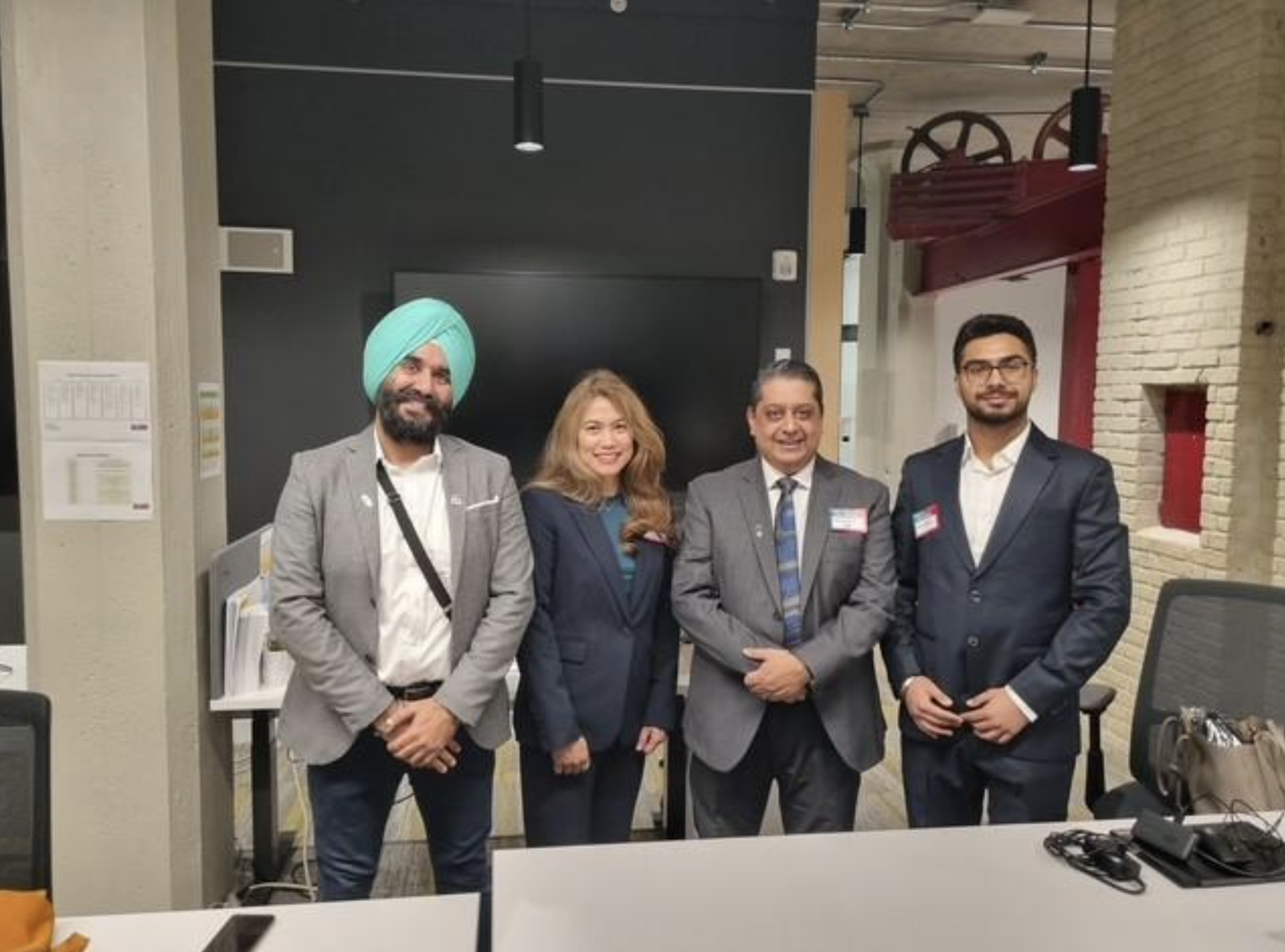
After logging these many miles in my career, I now have the strong urge to give back to the community that I am a part of, the same way my leaders, colleagues and friends have done for me, for the past so many years. Project Management, as a discipline allows you that opportunity, to connect and deliver—2 key things that keep me excited and satisfied with my profession.
As I now reach out to the community by speaking at various opportunities or mentor others, the urge to share and mentor keeps magnifying. The more I meet people from different walks of life, cultures and ethnicities, the wider my perspective gets.
Learning Never Stops
Today, in my role at Paradigm Consulting Group, I focus on organizational design, development, and the responsible adoption of emerging technologies, including artificial intelligence.
Once again, I’m reminded that while tools and frameworks evolve rapidly, human dynamics change far more slowly.
AI is transforming how projects are planned, delivered, and governed. But the most important questions remain familiar:
How do we help people adapt? How do we build trust? How do we ensure technology augments human capability rather than overwhelm it?
Most importantly, while AI can now do repetitive and mundane tasks most effectively, human beings must not lose the ability to validate and put their thumbprint on what AI generates for them. Think about this for the moment, Project Managers and Professionals in general, in today’s workplace, have a plethora of meetings. That is just reality. AI has established itself as a go-to for capturing meeting minutes, transcribing the conversations, identifying action items and then sending out communication to the team members with those details.
Years gone by, I would have to spend a couple of hours every single day just going through the tasks I mentioned above, after having attended all those meetings through the day. Imagine those tasks being done by established AI tools, opening up your time to do the validation of what AI is producing (yes, you still need to validate what AI produces – after all it is your name and reputation at stake) and allowing you the time to focus on the more important aspects of the job – planning, having conversations with team members and stakeholders, strategizing, removing blocks, mitigating risks. As my favorite fictional character, Hercule Poirot, says, “use your little gray cells, Mon Ami!”.

For project managers and professionals alike, continuous learning isn’t optional. The encouraging reality is that curiosity matters more than perfection. You don’t need to be an expert in everything — you simply need to be willing to learn, unlearn, and learn again.
Advice I'd Give My Younger Self (and Others)
After having gone through this journey thus far, if I had an opportunity to go back in time and speak to my younger self—or to those early in their project or leadership journeys—I would offer a few reflections shaped by experience:
- Careers are journeys, not straight lines.
- Strong theory and foundations matter and practice sharpens those foundations and turns them into skills.
- Patience and common sense are lifelong assets.
- Relationships are organic—the more they grow organically. Investing in them as deliberately as we invest in plans, is critical.
- Don’t confuse activity with progress—clarity always beats busyness.
- Embrace change as part of the job; it is the only constant.
- And above all, be kind to yourself—growth comes from reflection, not perfection.
Finally, I have to say this - Project management has given me far more than a career. It has given me perspective, humility, and a deep appreciation for what people can accomplish together when trust and purpose are present, and a huge volume of lasting friendships and relationships, without whose support and inputs, I would not be where I am today.
I am sincerely grateful to PMI Manitoba for the opportunity to reflect, share, and continue learning alongside such a vibrant community of professionals.
Vice President, Organization Planning and Development
Paradigm Consulting Group

Our next feature can be your project success, community highlight, lessons learned.... or YOU. Contact us at vpoperations@pmimanitoba.org